What is Balance photography?
Balance in photography is observed when an image has subject areas that look balanced throughout the composition. It is achieved by shifting the frame and juxtaposing subjects within it so objects, tones, and colors are of equal visual weight. An image is balanced when subject areas command a viewer’s attention equally.

There are two main techniques of balance: formal and informal. However, there are also other kinds of formal and informal techniques that photographers have been practicing to balance out lightness and heaviness, varying shapes, and even meanings behind a composition.
SYMMETRICAL BALANCE
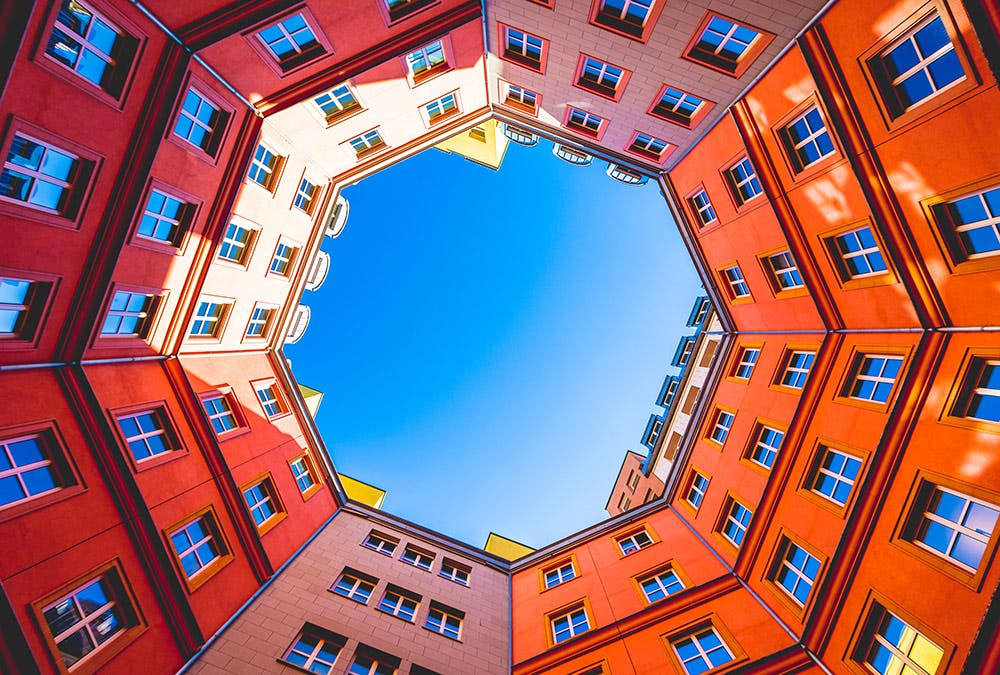
Symmetrical balance refers to balance that is achieved by arranging elements on either side of the center of a composition in an equally weighted manner. Symmetrical balance can be thought of as 50/50 balance or like a mirror image. In other words, the image would look the same on either side of the center.

ASYMMETRICAL BALANCE
Also known as informal balance, it is the most common compositional technique taught in photography and art workshops. Since it requires intentionally placing your subject off center, it’s more difficult to achieve but gets easier with daily practice.
The rule of thirds puts asymmetrical balance to your advantage, as it suggests that the center of interest lies along the intersecting lines of an image that is divided vertically and horizontally by four lines. Other ways to create asymmetrical balance within the composition is by balancing out your main subject with another, less important subject that contrasts with the former in terms of size, color, or general appearance.

In the photograph above, the viewer’s eye is initially drawn to the stones in the foreground, but is soon dragged to the mountains in the background. While the stones, being darker, hold a lot of weight, the brightness of the mountain in combination with the area it covers holds an equal weight. The range of highlights and shadows in the rest of the composition only reinforce this balance. Without the rocks, there would be too much negative space in the foreground. Without the mountain, there would be too much negative space in the background. Even though this photograph is not symmetrical, it is still equally balanced.
Few types of balance below is a type of asymmetrical balance;
TONAL BALANCE

While we have touched on tones before, tonal balance can be seen most clearly in photographs that are nothing but black, whites, and grays. Balance can be seen in terms of contrast between the light and dark areas of an image.
COLOUR BALANCE

We’ve seen how different tones hold different weights, but did you know that different colors hold different weights as well? Think about it this way: if you were looking at an image that was half bright red and half muted yellow, which color would your eyes automatically drift to? For most of us, the answer is the red. Brighter colors are ‘heavier’ than neutral colors, which is why a pop of color within a photograph can easily balance out a scene that would otherwise be too heavy on one side.
CONCEPTIONAL BALANCE

If you’re just getting used to using balance in your own compositions, take time to perfect the above types of balance before branching out to the more philosophical type. It’s important to note that for a photograph to be conceptually balanced, it should also be either asymmetrically or symmetrically balanced as well.
In the photograph above, you can see how the composition is beautifully tonally balanced. The deep shadows are perfectly countered by the bright shadows, and the darker industrial scene in the background balances the large, bright branch in the foreground. The balance doesn’t stop there, however. The branch, which is no longer alive, speaks to the effect of industrialization on the environment. The juxtaposition of industrialization and nature is only one of many ways that you can play around with conceptual balance in your own images


0 comments:
Post a Comment